Every January droves of people and Hollywood stars descend upon Park City, Utah to attend the Sundance Film Festival. As odd as it seems to have such a well-respected affair in out-of-the-way Utah, the Sundance Film Festival is one of the world's top five film festivals. It shares company with Cannes, Toronto, Venice, and Berlin. But its origins may surprise you.
Everyone knows that Robert Redford founded the festival, right? Wrong. Despite the myth that makes Redford the instigator of the festival, it was actually started by a film graduate from BYU, Sterling Van Wagenen, and Utah's Film Commissioner, John Earle. Van Wagenen and Earle created the festival for three reasons:
1.to entice more film makers to Utah
2.to provide a showcase for American films (although the festival has since developed international categories)
3.to recognize films not made in Hollywood.
The festival's first year was 1978. Redford was there from the beginning, but as a member of the board of directors. Redford has lived in Utah since the 1960s, and it was only natural that he should be invited to participate. Part of the reason that Sundance has garnered so much attention is doubtless due to its association with Redford. And because he was (and is) such a big name, the story that he founded the festival has never been strenuously denied.
Rather than being held in Park City, the first two festivals were held 45 minutes to the west in Salt Lake City. And not during the winter. The change came for the third festival. Sydney Pollack (yes, THAT Sydney Pollack), who was also on the board of directors, insightfully suggested that holding the festival at a ski resort during the winter would set it apart. However, back then the festival was known as the Utah/US Film Festival. The name didn't change until 1991, when the name was changed to reflect the fact that Redford's Sundance Institute has sponsored the event since 1985.
The combination of famous patrons, a unique setting, and a growing reputation for high quality independent films has made Sundance a major event. It lasts for ten days, has expanded to include 10 individual sections, and has spawned a variety of activities around it. People even come to screen movies out of the backs of their cars on the streets of Park City, hoping to get noticed - or to just have a good time.
Some of the most revered independent filmmakers of our time have received their big breaks while showing movies at Sundance. Quentin Tarantino, Robert Rodriguez, James Wan, Jim Jarmusch, and Kevin Smith all got their entrance into mainstream culture at Sundance. Additionally, movies like Clerks, The Blair Witch Project, and Napoleon Dynamite were all propelled into the mainstream and pop culture by their exposure at Sundance.
Wednesday, March 16, 2011
A Brief History of the Sundance Film Festival

Quick Art Pieces You Can Do - Even If You're Not an Artist
Art is in the eye of the beholder, so to speak - and art takes many forms - from beautiful hand-painted pieces of intense imagination, or chunky-looking piles of junk that make you scratch your head and wonder. If you’re in need of some nice artwork on your walls, you’re no artist, and you definitely don’t have the funds to go shopping for expense artwork, make some yourself. You don’t have to be an artist to do so. Just use a few things around your house and a couple of things from a craft store. And, your art pieces will be so wonderful yet no one will know how little they cost.
Blank canvases attached to wooden frames make a great base for your art. Use foam or regular brushes and make horizontal swipes, allowing ridges to build from brush marks, and minor drips to remain. These wide stripes, in various colors, can represent everything from a sea scape to a field of flowers.
An example is a beach scene made wide, white stripes across the top of the canvas then wide, blue stripes across the bottom. Switch to a smaller brush and make some white stripes, without much pressure on the brush, across the blue section. You can add a yellow circle in one corner, if you wish, but don’t make it too distinctive. Foam brushes allow you to circle the paint without adding much detail.
An example of a field of flowers requires a blue strip across the top third of the canvas, with strips of white included, if desired, then a very wide strip of green across the bottom. Now use a small brush to dot your favorite color of flowers across the green stripe. The flowers don’t have to have to be all the same color, and can overlap each other, too. This gives the effect of one standing in front of the other.
Use these techniques to make many different scenes, such as beach, cornfield, field of flowers, pond with ducks, row of houses, group of kids, and other images. After you get the color on the canvas, add your own real touches, such as a small group of silk daisies, along with a few sprigs of greenery, glued horizontally across the bottom of the canvas. For a beach scene you can glue on shells or even use glue and sand to enhance the design.
Mirrored wall designs are often considered art pieces particularly if they’re arranged in a unique and modern way. Mirrors without frames, but with beveled sides, make the best artwork pieces. Purchase one large mirror, then several smaller ones to start the project. You’ll also need small wooden dowel pieces, of various lengths, from an inch to three inches.
Paint the wooden pegs silver or gold. Hang the large mirror on the wall. Glue two to four of the pegs onto the back of each smaller mirror with contact cement, then attach the smaller mirrors onto the large one. The arrangement is your own, but here are some suggestions: Place one of the mirrors in the top corner, with part of the smaller mirror rising above the large mirror, and the other part of the mirror attached. Add a second mirror, in the same manner, placing it below and to the right of the first small mirror. Position the second mirror to where it extends out slightly past the large mirror. Use different sized pegs for each small mirror to get an even different effect. There are zillions of these mirror designs you can do, combining large, medium, and smaller mirrors attached to each other, some separated, or scattered across the entire wall.
Copper or foil, found on a roll at craft stores, can be used along with stencils to create some unique and beautiful shapes. Choose nice frames and mats then center the copper or foil design in the frame. Make several shapes and arrange them inside of the frame in a design that suits your style. Attach one of the copper or foil shapes to the outside of the frame to add to the beauty of the design. These wall hangings look expensive but aren’t.
Use inexpensive, small slabs of wood and rub-on transfers to make various art pieces for your home. Or, cut out slick magazine pictures of flowers, an old barn, or another image that catches your eye. For a rustic look, slightly burn the edges of the picture before mounting it on the wooden piece. Use the pieces in a manner as the mirrors, or hang them separately across the top of a mantel. The wooden slabs come in any number of sizes, shapes and colors.
There are many ways of making quick art pieces even if you’re not an artist. Combine things that interest you, and fit into your color scheme, and use your own style to create any number of beautiful pieces for your home. You’ll have fun with these projects because if it pleases you, it’s art!
The Akron Art Museum is Moving

credit
Growing up one of my favorite activities was visiting the museum in Akron. Formerly the Art Institute, the museum has been in existence since the twenties and moved around a bit until it settled at 69 East Market Street. By the seventies, the focus had changed from offering a historical collection of art to one that provided the “finest modern and contemporary art” to patrons in Northeast Ohio. Renamed the Akron Art Museum in 1981 they moved across the street to an old post office in what is now their current location.This is how I remember the art museum; interesting abstract exhibits that took up the entire room and a plethora of huge paintings that covered every major post-modern movement one could think of, cubism, pointillism, you name it! I then left Akron for college in the early nineties and had learned about other museums in other cities, notably those in Cincinnati and Dayton. It was not until recently on a trip back to Akron that I discovered that the museum was moving closer to the edge of downtown and had a new, visually aggressive design. The new design fuses the old building from the seventies with a new glass structure. Coop Himmelb(l)au is the team behind the new look, unlike other museums in Ohio the Akron Art Museum is rather small, as only 1% of their entire collection can be shown in the current structure at any time. When the new building opens up in 2006, those issues will have been addressed and Akron will finally have a museum on par with those elsewhere in Ohio and architecturally comparable to those in cities like Washington D.C, and New York City, for a change.
Friday, March 4, 2011
What You Need Know about Caring for a Baby, Newborn to One Year

celtics baby clothes
0-12 Months: What You Should Be Aware Of If you have never been around small babies or infants before, there are some important things that you should know. Just because they can’t walk, it doesn’t mean that they are always safe. If you are new at babysitting, or have a new baby in your extended family, here are some important things that you should know before you volunteer to keep the baby. *You should never let a baby get out of your eyesight. Unless the child is napping safely in a crib, you should never leave the room that a baby or infant is in. *If you are changing a baby’s diaper on a high surface such as a couch, bed, or table, you should have one hand on the child at all times. Even little newborns that can’t roll over can stretch, or startle, which can lead to a fall. *If the baby is in a car seat, infant seat, or a bouncy seat, you should never place it on a raised surface. Sudden movements by the child, or a jarring of a table, can send the baby into the floor. *Make sure that the area in your home where the baby will be located is free of blind and drape cords. You should also make sure that the baby can’t reach electrical cords, or phone cords. *An infant should never have access to plastic grocery store bags, or dry-cleaning bags. They can suffocate. *A child’s crib should be free of pillows and stuffed animals. They can cause suffocation. They may look pretty, but a child should never be left alone in their crib or playpen with these. *A baby should never be allowed to sleep on a waterbed, or a bed that is pushed up against a wall. Also, babies should never be placed near an open window. *Never leave your home without the baby, even if it is asleep. You should not even step across the yard to talk to the neighbor. You never know when an emergency might happen, such as a fire, fall from the crib, or being locked out of the house! *You should never leave an infant with a small child. Even a 5 or 6 year-old child can think they are older and stronger than they really are. If they try to pick up the infant, they could drop him. Even a bear hug to an infant could break its bones. *All baby and infant car seats should face the rear of the car. Follow all instructions in regards to the car seat. *Never, ever leave an infant in the car. It doesn’t matter if you are just stepping in to pay for gas. Weather conditions are hazardous to infants. Also, your child could be stolen. *Always do a thorough investigation of your home, and especially areas where the infant will be. Small, minute objects can choke an infant. Babies always have their hands in their mouths. Anything that is in their hands will come in contact with their mouths. *If you are giving an infant a bath, remember that these little people can drown in mere inches of water. You should always have a firm grip on a baby when you are giving them a bath.
Sunday, February 27, 2011
DIY Wedding Photography on a Budget

Photo Credit: celtics baby clothes
So, your wedding is fast approaching and you want memories that will last a lifetime. However, you are on a budget and don't have a lot of money to spend for a professional wedding photographer. You can still get professional-looking, creative, memorable pictures with DIY wedding photography.
The first thing to do is to find someone who takes great pictures. This doesn't have to do be a professional photographer. Many people have a "great eye" and instinctively know how to take great pictures. Think of friends or family members who you've complimented on their photography from vacations, for example. Another way to find a cheap wedding photographer is to look on local college bulletin boards, or post on them yourself in the art department or photography department. Many students have amazing talent, but since they are still a bit inexperienced, will be your wedding photographer for a fraction of the price of a professional wedding photographer. Some may even photograph your wedding for free, for no more than a free meal and use of your wedding pictures for their portfolio. You can also consider putting an ad on Craigslist for a hobbyist who is not a professional wedding photographer, but has an artistic eye and loves to take pictures. Get samples of work and negotiate a price you are both pleased with.
Whether you use a talented stranger or an artistically-inclined friend or family member as your wedding photographer, make sure they have a good camera. You may even consider purchasing a good quality, digital camera that you can give them as their "payment". If you need to purchase a camera for your DIY wedding photography, make sure you give it to the wedding photographer in plenty of time for them to learn the ins and outs of the camera, so they can adjust the settings. Digital cameras also allow for easy editing, so you or your DIY wedding photographer can edit your wedding pictures. Also, digital cameras have a large capacity to store many pictures, with a memory card they can hold hundreds of pictures, so you will have plenty of wedding photos to choose from to preserve your special day.
Another idea is to meet with your DIY wedding photographer to develop a plan of what you want photographed. Remember, since you will be saving a lot of money by not hiring a professional wedding photographer, you will have to do some of the work yourself. This includes providing the DIY wedding photographer with a list of what you want photographed. This may include photographs of the wedding rings, the wedding invitations, the bridal party, the groomsmen, the family of the bride, the family of the groom, the bride and groom's first kiss, the wedding service, etc. This will help you and your DIY wedding photographer be on the same page and know each other's expectations beforehand, so you get exactly what you want on your special day.
Also, encourage others to take pictures of your wedding. Some of the best wedding photography are those wonderfully candid moments caught by some of the guests. Some wedding couples choose to put disposable cameras on tables for guests to take photographs of, then ask that they leave the cameras when they leave the wedding reception. Some give the cameras out as wedding favors and ask that any great wedding photographs be sent to the married couple.
Lastly, consider the best of both worlds. You can hire a professional wedding photographer for a short period of time to take a few very specific pictures, then rely on your DIY photographer and wedding guests to take the rest of the photographs. This will eliminate a lot of cost for a professional wedding photographer. You can also opt to don your wedding attire a few days after the event and go to a studio to have a few professional pictures taken.
Remember, it doesn't take a professional photographer to take some amazing, creative, professional-looking wedding photography. Have a great day!
A Look at Some Helpful Photography Websites With Beginner Photography Tips and Advice For Pros

photo source
When I was in high school I found my moms old Nikon camera. I always wanted to get into photography but didn't know anything about it. So I got a job at a photo lab and took that camera with me everywhere. I'd bring the film into work the next day to see what I had learned and how the photos turned out. When prom time came around a bunch of my friends wanted me to do their prom pictures. So I borrowed a nicer camera from a friend and charged my friends to shoot their prom pictures. I made enough money to buy my first camera. After that it was a start of a dream
Since then I have done paintball photography for a world wide magazine, been a sports photographer, wedding photographer, school photographer, child photographer, and every kind of photographer in between. These are a list of sites I used when I first started out that I found to be invaluable.
www.photographytips.com
Great site that is some what member based. You can look around most of the site for free but if you want to access everything there is to see you can sign up online for only $5.00 a month. There are great articles on subjects from composition, to light, to how to use your flash. There are also some great galleries so that you can learn by example. Every page is filled with helpful information and numerous pictures that help explain the topic of the article.
www.photosecrets.com
This site may not be graphicly pleasing but it covers its bases. The tips are divided up into beginner, intermediate, and advanced. The beginner section covers topics like what kind of camera and film you should buy as well as how to take better pictures of people. he intermediate section talks about quipment, hot to tackle more complicated subjects, and travel photography. The advanced section is more about selling photos, more details about film, and the use of filters. The only thing I Don't like is there are no photos on any of the pages. I think a photography site should have pictures!
www.kodak.com
As one would expect this site covers everything that is photography. This site is easily to scroll through and has a wide variety of topics. Learn the best way to photograph your baby, take better vacation pictures, or photograph your pet. The site also covers topics like printing pictures, sharing pictures, and getting started in digital. The photographs on the site are great and offer some step by step examples of topics discussed in the articles. There are also interactive demos on different subjects that are worth checking out. You can even research information on
film and digital cameras.
www.photonhead.com
This site offers a great tool for the photographer who wants a better understanding of shutter speeds and f-stops. This is the hardest concept to grasp when starting out=t in photography. I know, Ive been there. No matter how many times its explained you just Don't quite get it. This site offers a tool where you can set shutter speeds ad and f-stops in any combination and see what the effect would be. You have a sample photo to your left and to your right you can see what it would look like with your f-stop and shutter speed combo. This is a great tool that helps you learn about f-stops, shutter speed, focal length, and depth of field.
www.betterphoto.com
This site offers online photography course for the photographer who wants to become a professional. The online classes are rated for skill level of the photographer. Classes usually include weekly assignments and have the course instructor personally look over your work. Course range from the business of photography to how to use photoshop and many other topics. Classes vary in price. A 8week class could be between $200-$400. If your aren't happy with your course by the third assignment there is a money back guarantee.
www.scphoto.com
This is one of the best sites I can recommend for young photographers who need direction. This site was created by a high school photography teacher. Its is a free lesson plan that offers homework for photographer. The best thing it offers is assignments on different areas of photography. There are assignments for learning magazine photography,lighting, concepts, and much much more. There are list of words and terminology you should new. Its basically a free high school photography class. I went through the whole lesson plan when I was teaching my self photography and highly recommend it.
Photosecrets.com
Photographytips.com
Kodak.com
Photonhead.com
Betterphoto.com
Saturday, February 26, 2011
Shooting for Stock Photography
credit,credit
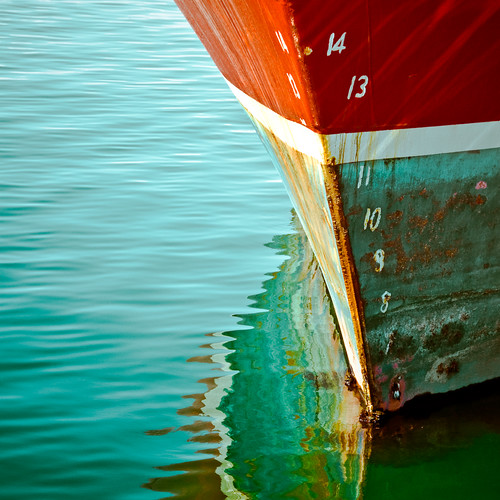
A great way to earn money and learn a lot in the internet is participating in stock photography. Stock photography has been around for a while. And there are a lot of great stock sites that sell photographs for a reasonable price.
Just how and what should you shoot to be able to participate in stock photography?
Photographers say you should start with the concept. But the very first thing you should do is to know your equipment. I literally spent ten times more time trying to know how my camera works than thinking of something to shoot.
Stock photography is a very demanding industry. It's as close as you'll get to professional photography. It requires you to be able to produce images of the highest quality. That is because this industry is very competitive.
Try shooting the same subject with different settings. You should know how your camera reacts with different kinds of light. You should also know how it responds to different levels of illumination. Note the differences you see and keep them in mind.
Next you need a concept. Your images should present an idea, a thought or an expression. Consider a photograph of a man typing on a computer. What is he doing? Why is he typing? Is he working? Is he Blogging? Or just playing?
Designers buy stock images because of the concept they present - not because they look good. Stock photos are used in web sites, brochures, magazines, publications, advertisements, and almost anything that has a print.
So you need to have an image that has a concept that satisfies the needs of the would-be buyers of your pictures.
Then, you need a lot of light. Stock photos require that images have the right level of illumination and contrast. They need to be clear. If you can't afford a big set-up, you can always use desk lamps or even the sun.
You'll also need a computer and two kinds of programs: noise reduction tool and a photo editing application. Most stock photographs go through a noise reduction process. They also get a little tweaking in color, contrast and brightness.
Stock photographs need to be as close to perfect as possible. It's like what they say in the computer graphics industry: "it does not matter how you do it as long as you get the job done." Don't think that editing a photo in your pc is cheating. That only goes for journalism.
The next is pretty simple. You need a stock agency to upload your images to. Or you can showcase your work in your own site. Uploading in stock agencies is better. That is because you can find out where and how to improve. Use their powerful community to find out your weakness and strengths as a photographer.
Then when you have all this, what you need to do next is to be consistent and improve and improve and improve. You need to keep up with the ever demanding industries. If you don't, you'll get left behind.